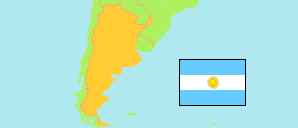
San Rafael
Department in Mendoza
Department
The population development of San Rafael.
| Name | Status | Population Census 1991-05-15 | Population Census 2001-11-17 | Population Census 2010-10-27 | Population Census 2022-05-18 | |
|---|---|---|---|---|---|---|
| San Rafael | Department | 158,266 | 173,571 | 188,018 | 215,020 | → |
| Mendoza | Province | 1,412,481 | 1,579,651 | 1,738,929 | 2,043,540 |
Contents: Localities
The population development of the localities in San Rafael.
 icon links to further information about a selected place including its population structure (gender, age groups, age distribution, place of birth).
| Name | Status | Department | Population Census 1991-05-15 | Population Census 2001-11-17 | Population Census 2010-10-27 | Population Census 2022-05-18 | |
|---|---|---|---|---|---|---|---|
| 25 de Mayo (Villa Veinticinco de Mayo) | Locality | San Rafael | 1,440 | 1,585 | 1,450 | 2,087 | → |
| Barrio El Nevado | Locality | San Rafael | 156 | 117 | 160 | 180 | → |
| Barrio Empleados de Comercio | Locality | San Rafael | ... | 211 | 208 | 804 | → |
| Barrio Intendencia | Locality | San Rafael | ... | 124 | 120 | 387 | → |
| Capitán Montoya | Locality | San Rafael | 323 | 360 | 362 | 1,734 | → |
| Cuadro Benegas | Locality | San Rafael | 426 | 1,122 | 1,253 | 2,533 | → |
| El Nihuil | Locality | San Rafael | 1,495 | 847 | 1,030 | 1,327 | → |
| El Sosneado | Locality | San Rafael | ... | 91 | 65 | 174 | → |
| El Toledano Norte | Locality | San Rafael | ... | ... | ... | 820 | → |
| El Tropezón | Locality | San Rafael | 330 | 355 | 462 | 750 | → |
| Goudge | Locality | San Rafael | 1,479 | 1,818 | 2,126 | 2,948 | → |
| Jaime Prats | Locality | San Rafael | 314 | 388 | 419 | 463 | → |
| La Llave Nueva | Locality | San Rafael | 441 | 462 | 499 | 783 | → |
| Las Malvinas | Locality | San Rafael | 192 | 232 | 232 | 264 | → |
| Monte Comán | Locality | San Rafael | 3,915 | 3,712 | 3,529 | 3,617 | → |
| Pobre Diablo | Locality | San Rafael | ... | 609 | 526 | 2,197 | → |
| Punta del Agua | Locality | San Rafael | ... | 247 | 382 | 346 | → |
| Rama Caída | Locality | San Rafael | 903 | 901 | 850 | 2,697 | → |
| Real del Padre | Locality | San Rafael | 2,451 | 3,345 | 3,635 | 4,004 | → |
| Salto de las Rosas | Locality | San Rafael | 858 | 1,059 | 1,343 | 4,505 | → |
| San Rafael (incl. Barrio Campos El Toledano) | Locality | San Rafael | 94,651 | 107,080 | 118,965 | 139,191 | → |
| Villa Atuel | Locality | San Rafael | 165 | 294 | 3,311 | 3,531 | → |
| Villa Atuel Norte | Locality | San Rafael | 165 | 294 | 271 | 270 | → |
Source: Instituto Nacional de Estadística y Censos de la Republica Argentina.
Explanation: The 2022 census figures for localities refer to the population in private households, i.e., they exclude institutional population and homeless people.